
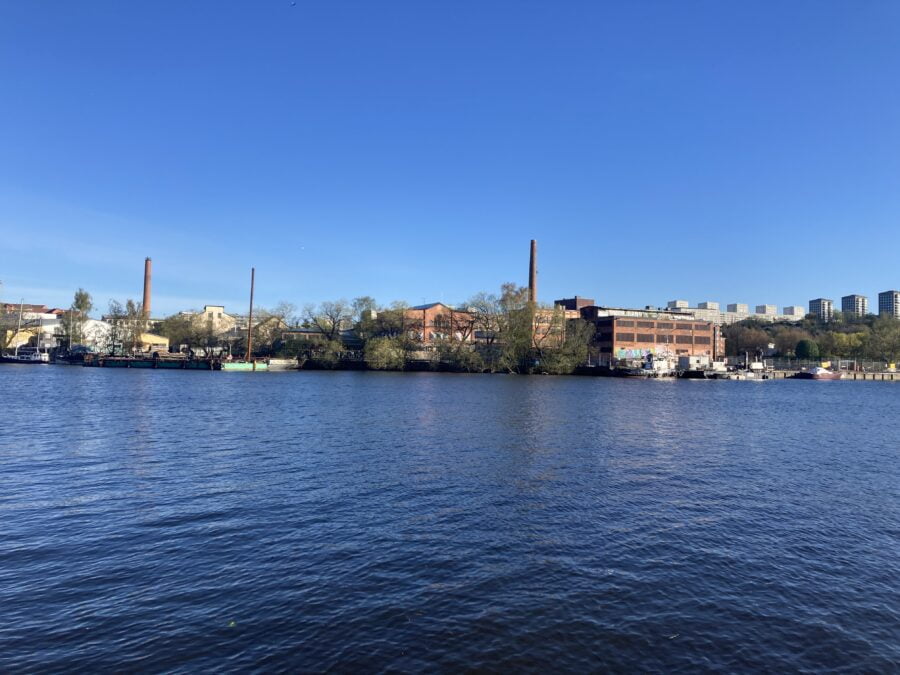
Lövholmen – Vilken framtida stad vill vi se?
Det rivs och saneras – vad kommer istället?
Färgfabriken befinner sig mitt i ett tidigare industriområde som kallas Lövholmen. I området finns en stor grupp verksamma inom olika kreativa verksamheter.
Stora ekonomiska värden står på spel, byggaktörerna vill riva och bygga nytt. Färgfabriken och många andra intresserade av stadsbyggnad vill gå försiktigare fram och ta till vara på flera av de unika byggnader och de lager av industrihistoria som ger området sin speciella karaktär. Färgfabriken håller därför ögonen på processen genom utställningar, diskussioner och debatter. I denna avdelning kan ni följa vårt arbete med processen.
Filmen ovan gjordes 2019, efter att en första strukturplan för Lövholmen gått ut genom ett tidigt samråd.
Samråd kring ny detaljplan
5 september–16 oktober 2023 pågår öppet samråd kring förslag på ny detaljplan för Lövholmen. Läs mer här.
En kort bakgrund
Liljeholmen var Stockholms första industriförort. Lövholmen är idag är den sista resten av det gamla industrilandskapet. Sedan 1995 har Färgfabriken verkat här, i lokaler från 1889. Det senaste decenniet har industrierna successivt flyttat ut. På 23 000 kvm finns sex olika markägare. Planering inför kommande exploatering och medborgardialog har påbörjats. Området är på ytan nedgånget, men det är också ett faktum att Lövholmen är en kreativ hubb, med ca 300 kreatörer som verkar i några av de gamla industrilokalerna. Platsen Lövholmen låter oss sätta ljuset på en rad frågor som för Stockholm och många andra städer i världen är centrala för framtidens urbana miljöer. Vilken betydelse har dessa slitna områden? Vad gör man med platser i väntan på exploatering, och hur kan de hållas öppna och levande även under byggtiden? Hur tar man vara på historiska industriella miljöer som en del av platsens kulturarv? Vilken betydelse har det att gamla lokaler tas över av kreativa krafter i övergångsperioderna – och vad händer med dessa när byggkranarna rullas in och de fina nya bostadsrätterna står klara? Vilka planeras och byggs det för? Finns potential för att Lövholmen blir något nytt eller kommer det bli konventionellt och likt annat som byggs idag? Hur skulle morgondagens mångfacetterade stadsliv kunna se ut? Hur kan Lövholmen spela en viktig roll för att knyta ihop och överbrygga mentala och fysiska barriärer i staden?
Utställningar


Genomförda aktiviteter


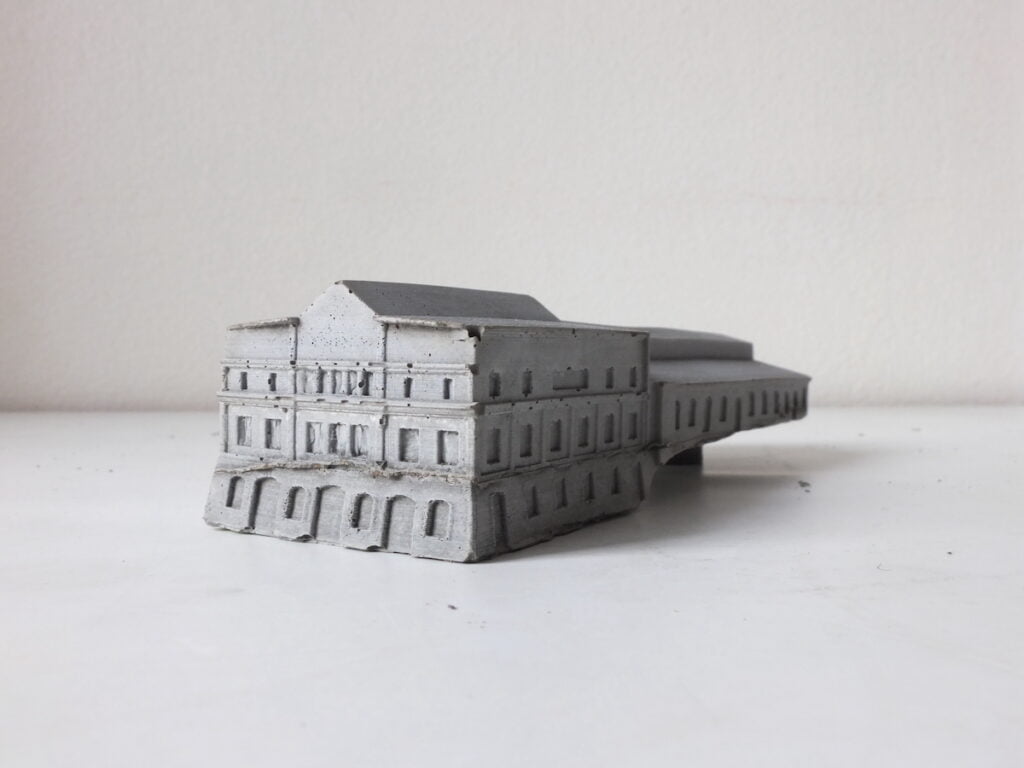


Läs mer här


Publikationer
Debattartikel i StockholmDirekt: Fastighetsägarna har låtit Lövholmen förfalla
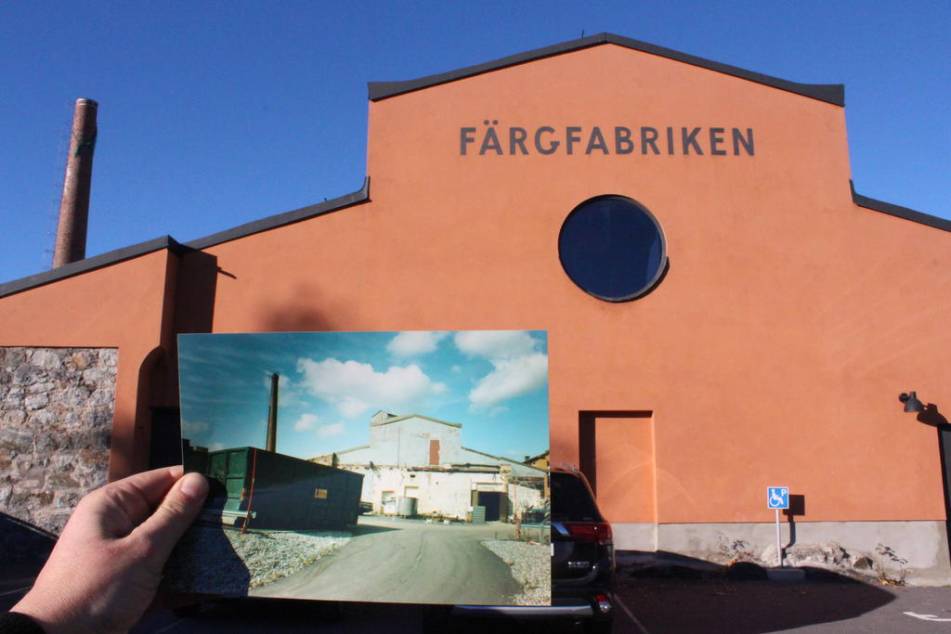
Färgfabriken presenterar sin uppfattning över vad som sker i området Lövholmen i en debattartikel 29/10. Fastighetsägarna, Skanska, har under tio års tid möjliggjort förfallet genom underlåtelse av underhåll, trots Stadsmuseets grönmärkning. Att aktivera området genom att under mellantiden ha upplåtit lokalerna till tillfälliga verksamheter såsom Skanska har gjort i gamla Beckers huvudkontor hade på ett enkelt sätt löst frågan om förslumning och förfall. Artikel är ett svar på en tidigare artikel, Följ med in i övergivna industriområdet, publicerad 19/10, StockholmDirekt. Klicka på bilden för att läsa artikeln.
Färgfabrikens undersökning och idéer för Lövholmen från 2007

Under vår/sommar 2019 samlade vi in åsikter och idéer genom en enkät som vi sammanställer under hösten 2019.
Josef Östbloms examensarbete vid SLU: Transformation av Lövholmen industrilandskap

Kontakt
Partners
Med stöd från Stockholms stad.